Sauna heaters
Electric and wood-burning stoves for building or upgrading a traditional sauna: stones you can throw water on, and a safety listing.
How we rank sauna heaters
- Heat & steam 25%
- Build 15%
- Safety listing 25%
- Durability 20%
- Value 15%
Why, and what each one means
Heat and steam come first. Finnish saunas run at 80 to 100 °C and 10 to 20% humidity (review (opens in a new tab)), with steam from water thrown on hot stones (our guide), so we look for a stone mass that makes real steam. Safety is next, checked in Intertek’s directory or on the certificate itself, not on the box. Durability follows: warranties run from one year in Harvia’s manual to three in HUUM’s terms. Wood-burning stoves have no North American listing, so they score lower on safety.
- Heat & steam 25%
- Enough stones for real steam when water hits them, and the power to bring the room the maker sizes it for to 80 °C or more.
- Build 15%
- Stainless steel or cast iron, with no plastic or painted parts in the hot zone.
- Safety listing 25%
- UL, ETL or CSA listed for North America with its controls (or the local listing where it is sold), and clear clearances to walls and benches.
- Durability 20%
- Built to last and to be repaired: a long warranty, parts sold separately and a maker that services what it sells.
- Value 15%
- Price for the room size it heats, with the controls it needs.
Each product scores every one from 1 to 5, and its rating is the weighted average. We list only products rated 3 or above that break none of our rules.
We avoid
- Unlisted heaters sold for North American wiring.
- Heaters too small for the room, which never reach sauna temperatures.
- Infrared panels sold as a sauna heater (see Saunas for how infrared compares).
Read the research
Know one that fits? Suggest a product
7 products · best rated first
-
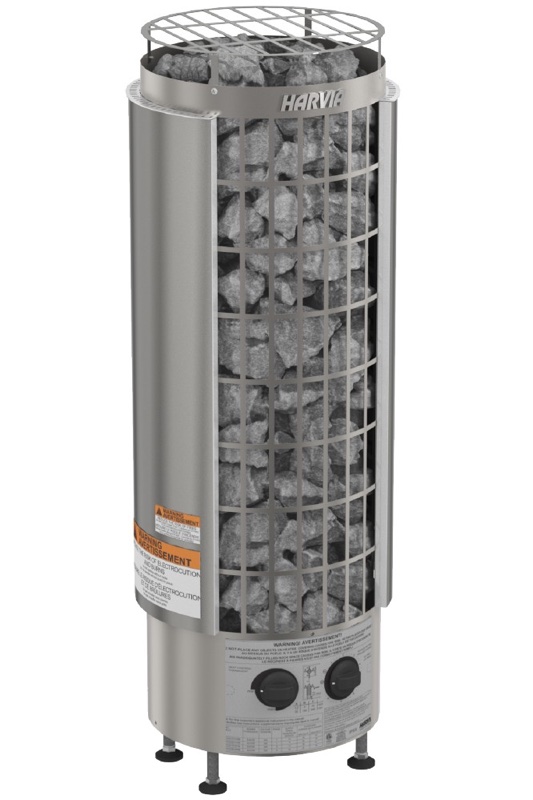 Harvia
 Cilindro PC90 9 kW Electric Sauna Heater (240 V, built-in controls)
A simple floor-standing Finnish pillar heater with 200 lb of stones and built-in dials, whose model pattern is in Intertek’s UL 875 and CSA listings. Harvia’s manual gives a one-year guarantee. About $1,920 with stones. ETL Listed (UL 875 and CSA E60335-2-53): its model pattern HPC(S)9U1HB is in Intertek’s directory for Harvia Finland Oy -
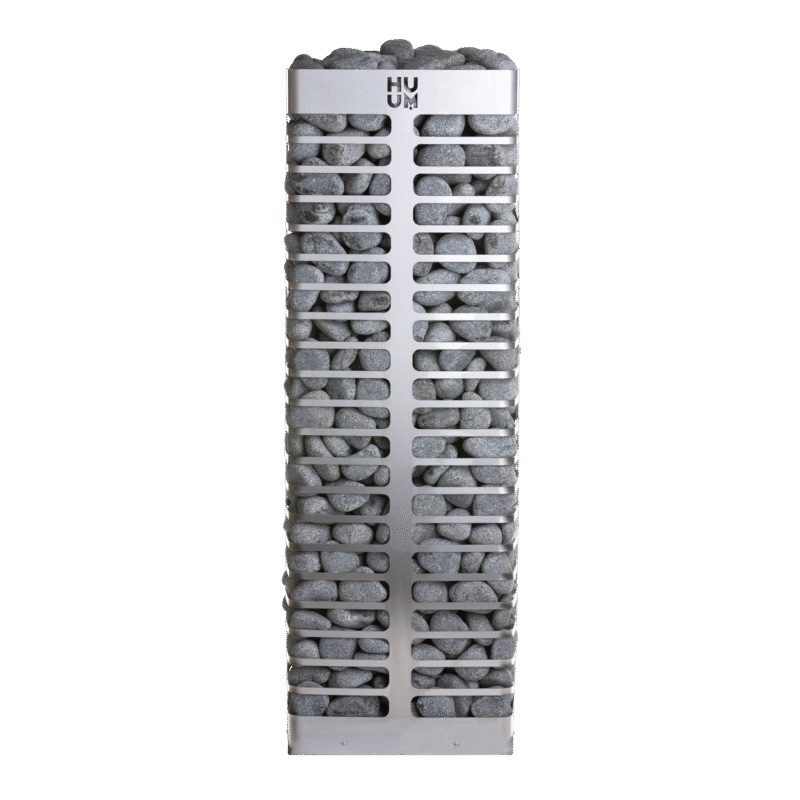 HUUM
HUUM STEEL 6 kW Electric Sauna Heater (240 V)
A slim stainless steel heater that holds about 330 lb of stones for rooms of 177 to 318 ft³. SGS’s own database lists it to UL 60335-1 and CSA E60335-2-53. It needs a UKU control and stones, and the warranty leaves out the elements. SGS North America certificate SGSNA/20/SUW/00067X (UL 60335-1, CAN/CSA C22.2 No. 60335-1 and CAN/CSA E60335-2-53) naming STEEL 6, STEEL 9 and STEEL 11; SGS’s own certificate page shows it valid, issued 2025-06-27, and the heater was evaluated with the HUUM UKU control -
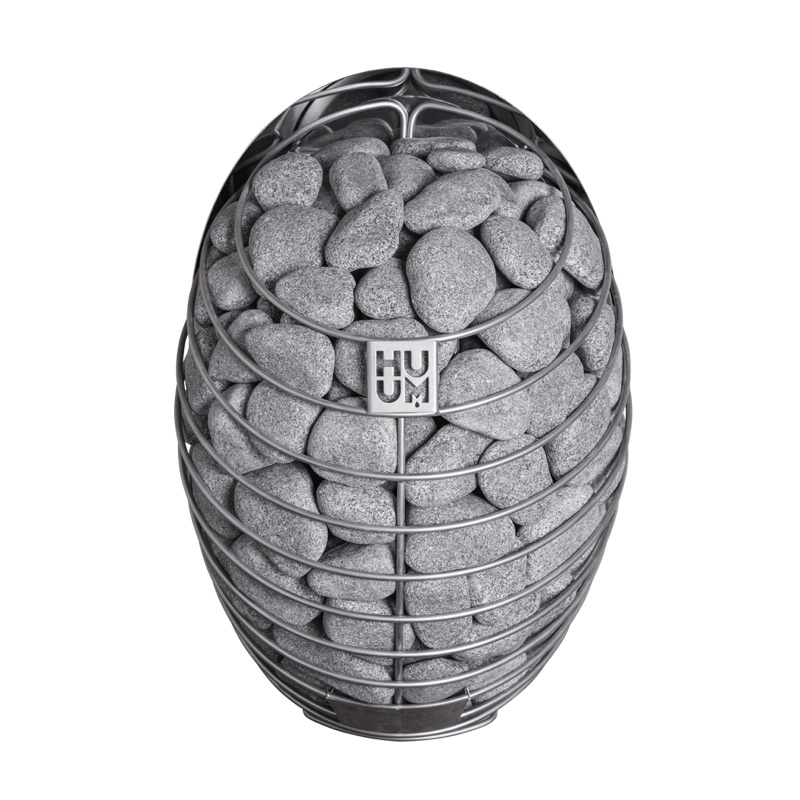 HUUM
HUUM DROP 6 kW Electric Sauna Heater (240 V)
A compact Estonian stainless steel heater with up to 121 lb of stones and an SGS North America certificate to UL 60335-1 and CSA E60335-2-53. It needs a separate control, and US warranty claims go to HUUM in Estonia. SGS North America certificate SGSNA/20/SUW/00067X (UL 60335-1, CAN/CSA C22.2 No. 60335-1 and CAN/CSA E60335-2-53), covering Drop 4.5, 6, 7.5 and 9 kW; SGS’s own certificate page shows it valid, issued 2025-06-27 -
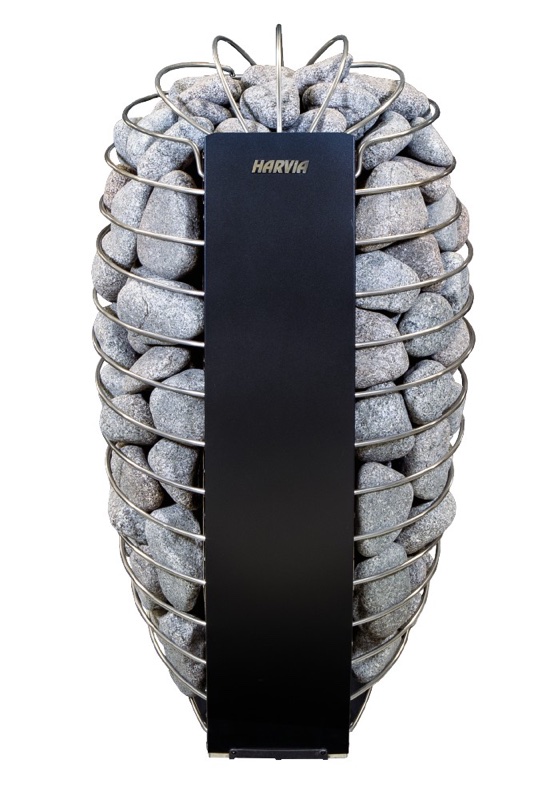 Harvia
 Spirit SP60E 6 kW Electric Sauna Heater (240 V)
A compact wall-mounted Harvia heater whose model pattern is in Intertek’s UL 875 and CSA listings. It holds 110 lb of round stones for 177 to 294 ft³, needs a separate control unit, and about $3,100 buys a working set. ETL Listed (UL 875 and CSA E60335-2-53): its model pattern HSPE60U1M is in Intertek’s directory for Harvia Finland Oy -
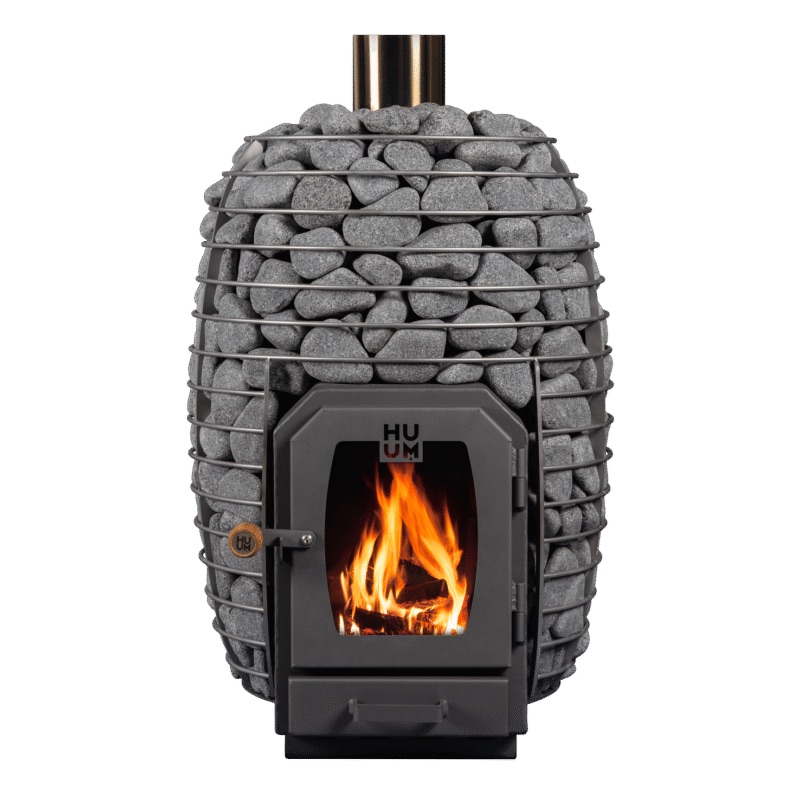 HUUM
HUUM HIVE Wood 13 Wood-Burning Sauna Stove
A stone-heavy Estonian wood stove (198 lb of stones, 13 kW) with a 5 mm stainless flame tamer. It has no North American listing, only a declared EN 15821 result, and its manual says the casing is painted, unlike several sellers’ pages. Declares performance to EN 15821:2010, the European standard for wood-fired sauna stoves (no North American listing) -
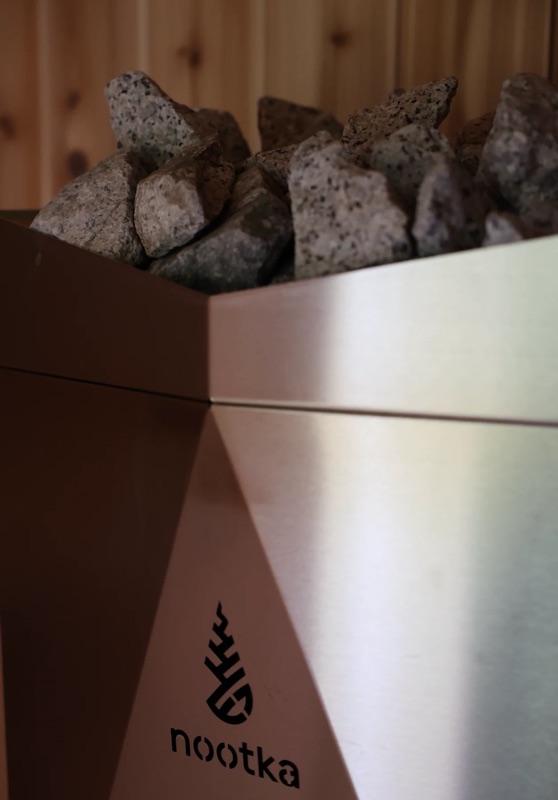 Nootka Saunas
 Electric Heater, 9 kW, 240 V single phase, with touchscreen control
A wall-mounted 9 kW stone heater whose models are in Intertek’s directory to UL 875 and CSA C22.2 No. 164. The control is in the price. It comes with only about 40 lb of rocks in a Nootka sauna kit, a short warranty and no other seller. Models 7.5kW-1ph, 9kW-1ph and 9kW-3ph are in Intertek’s directory to UL 875 (ETL Listed) and to CAN/CSA C22.2 No. 164 (cETL Listed) -
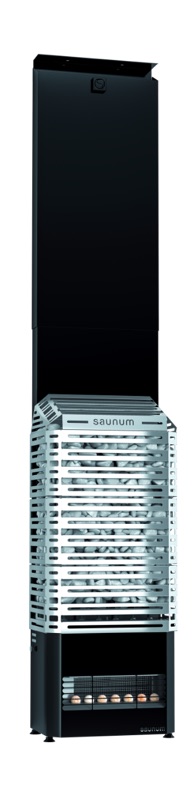 Saunum
 AIR 5 Sauna Heater with Climate Equalizing Fan (240 V)
A UL-certified Estonian heater with 110 to 130 lb of stones and a fan that evens out the temperature. Use is limited to 140 to 194 °F, the AirIQ control is extra (about $4,410 in all), and the salt-ion claim has no study behind it. UL certificates UL-US-2310119-2 (UL 875) and UL-CA-2308849-2 (CSA C22.2 No. 164-18), 11 May 2023, naming Saunum AIR 5, 7 and 10