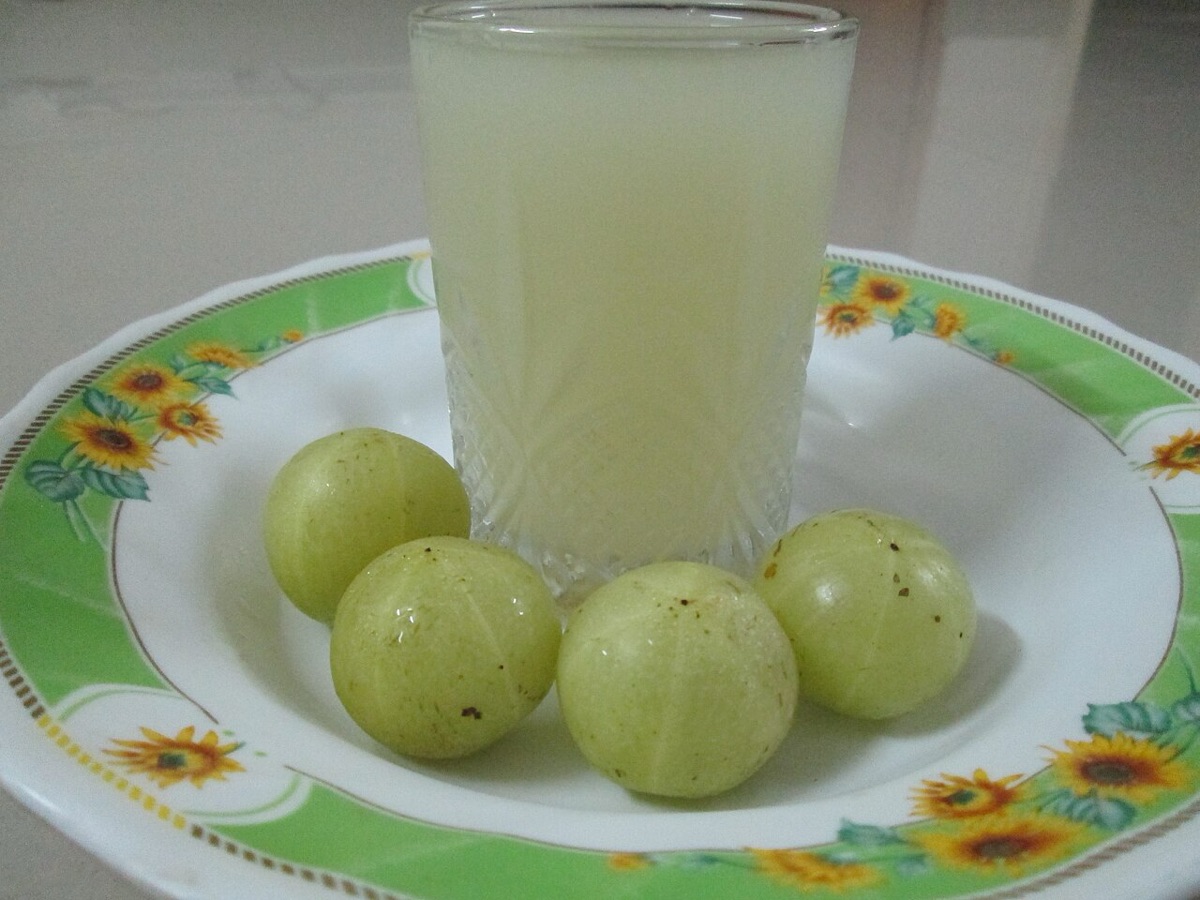
Recipes · Health Shot
Amla Ginger Honey Shot
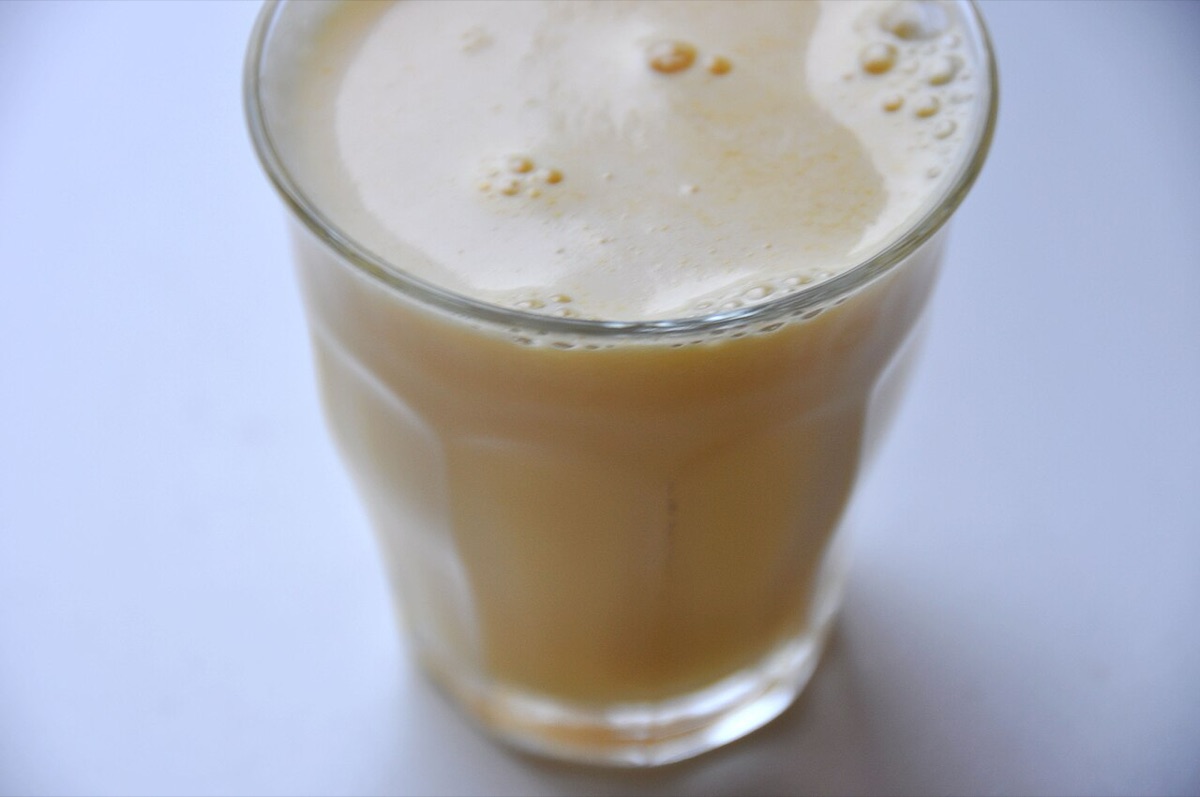
Reader ratingsTart, astringent Indian gooseberry juice softened with fresh ginger, a spoonful of honey and a pinch of black salt — the way many Indian households take amla in the cool months.
Amla (amalaki) is one of the central fruits of Ayurveda, eaten fresh, pickled or as juice, and the main ingredient of chyawanprash and a third of triphala.
Safety
- Amla lowered blood sugar and cholesterol in trials, and a review describes antiplatelet and anticoagulant effects, mostly from lab and animal studies. If you take diabetes medicines, a statin, or blood thinners such as warfarin, aspirin or clopidogrel, check with your prescriber before drinking it regularly, and tell your surgical team before any procedure.
- The shot is very sour and astringent. Its acid and tannins can irritate the stomach, worsen reflux and wear tooth enamel, so start with half a shot, sip through a straw and rinse your mouth with plain water afterwards.
- Amla is one of the richest fruit sources of vitamin C, and a Swedish study linked vitamin C supplements to more kidney stones in men. A shot is far less than a supplement, but ask your doctor if you form kidney stones.
- Amla is an everyday food in India, but there is little safety data on a concentrated daily shot in pregnancy and breastfeeding, so ask your midwife or doctor first. Contains honey, so not for infants under 12 months. A shot is a small extra, not a substitute for a meal.
Why it’s good for you
Amla is one of the richest fruit sources of vitamin C and is high in tannins and other polyphenols, while the ginger and honey take the edge off its sharp, mouth-drying flavor.
Evidence
Limited evidence
Mostly small, early, or laboratory studies.
A 2023 meta-analysis of five short randomized trials (3–12 weeks) found amla supplements lowered LDL and total cholesterol, triglycerides, fasting glucose and C-reactive protein and raised HDL. The largest trial gave 98 people with abnormal blood fats 500 mg of extract twice a day for 12 weeks and found lower total cholesterol, triglycerides and LDL than placebo, and an uncontrolled 21-day study found 1–3 g of dried fruit powder a day lowered blood glucose and cholesterol from the volunteers’ own starting values. These trials used powders and standardized extracts, not fresh juice, and were small and short, so the findings are promising but not settled; regular vitamin C supplements did not reduce how many colds people in the general population caught (Cochrane review).
General information from research and traditional use — not medical advice, and not a treatment for any condition. If you are pregnant, nursing, taking medication or managing a health condition, check with your clinician first, and seek care for symptoms that are severe or do not improve.
Ingredients
Instructions
- Rinse the amla and cut each one into quarters. Pry the segments off the small hard stone in the middle and discard the stones. Scrub the ginger and chop it roughly.
- Blend the amla segments, ginger and 3/4 cup cold water on high for 45–60 seconds until you have a thick, fibrous pulp.
- Pour the pulp through a fine sieve or nut-milk bag set over a bowl and press hard on the solids. You should have about 1 cup (8 oz) of juice.
- Stir in the honey and the black salt until the honey dissolves. Taste and adjust: a little more honey if it is too sharp, or a splash of cold water if it dries your mouth too much.
- Pour into a sealed glass bottle and shake. Drink one 2 oz shot at a time, with or after food.
Tips
- Fresh amla appears in Indian grocery stores from about October to February. Frozen whole or pitted amla works all year; thaw it first, since frozen fruit is hard to stone.
- Powder shortcut: stir 1 tsp amla powder (roughly 2–3 g, in the range of the dried-fruit doses used in trials) and 1 tsp honey into 2 oz of warm water. It tastes more tannic than the fresh shot.
- Keeps 3 days in a sealed glass bottle in the fridge; shake first, because the honey settles. The juice darkens as it sits, which is normal. Freeze in ice-cube trays for longer.
- Do not throw the pulp away: stir it into a pot of dal, or simmer it with a little jaggery or honey and spices into a quick chutney.
Reader ratings & reviews
– out of 5
Loading ratings…
Rating breakdown
- 5 stars 0
- 4 stars 0
- 3 stars 0
- 2 stars 0
- 1 star 0
Made this? Please rate it.
Check your email
We sent a sign-in link to . Click it and you’ll come straight back here, signed in. It expires in 15 minutes; check your spam folder if it doesn’t show up. Thank you for helping the community!
Your review
Reviews are personal experiences. Every review is read by our team before it appears.
More health shots
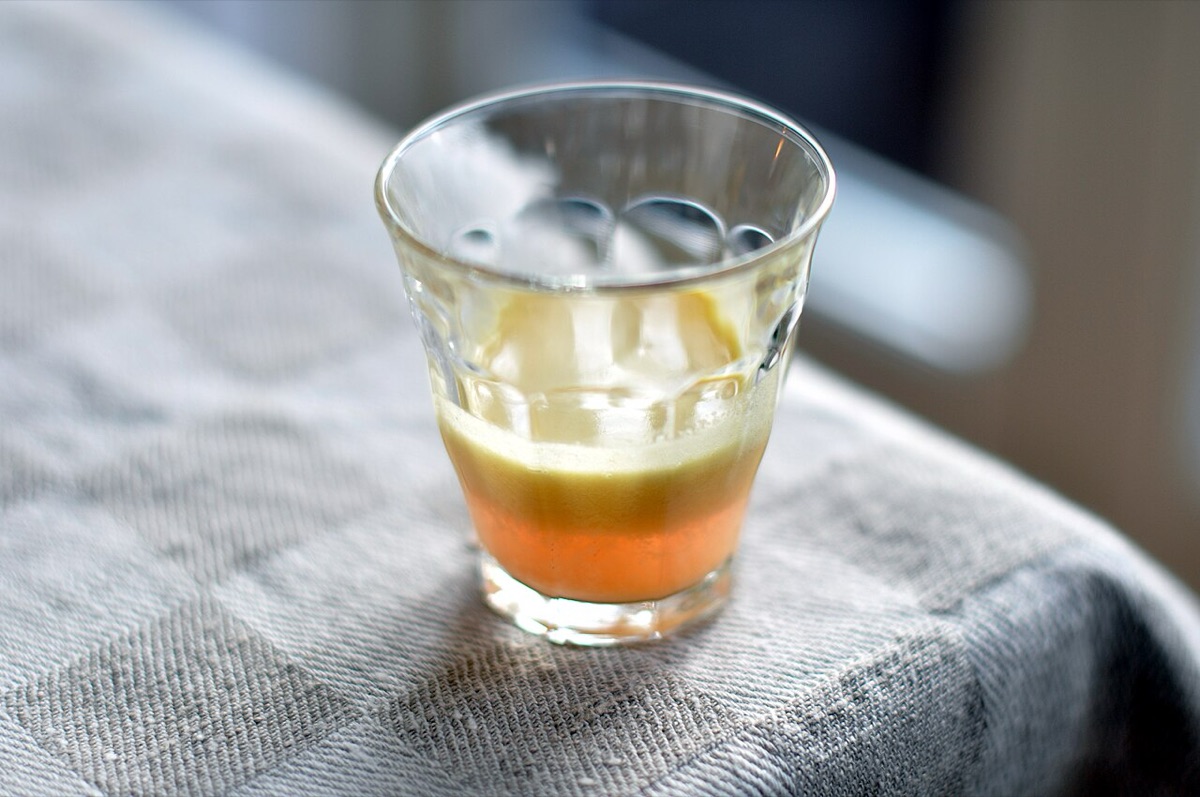
Fresh Ginger Lemon Shot
A bright, warming shot of fresh ginger and lemon softened with a little honey — the classic for an unsettled stomach.
Moderate evidence
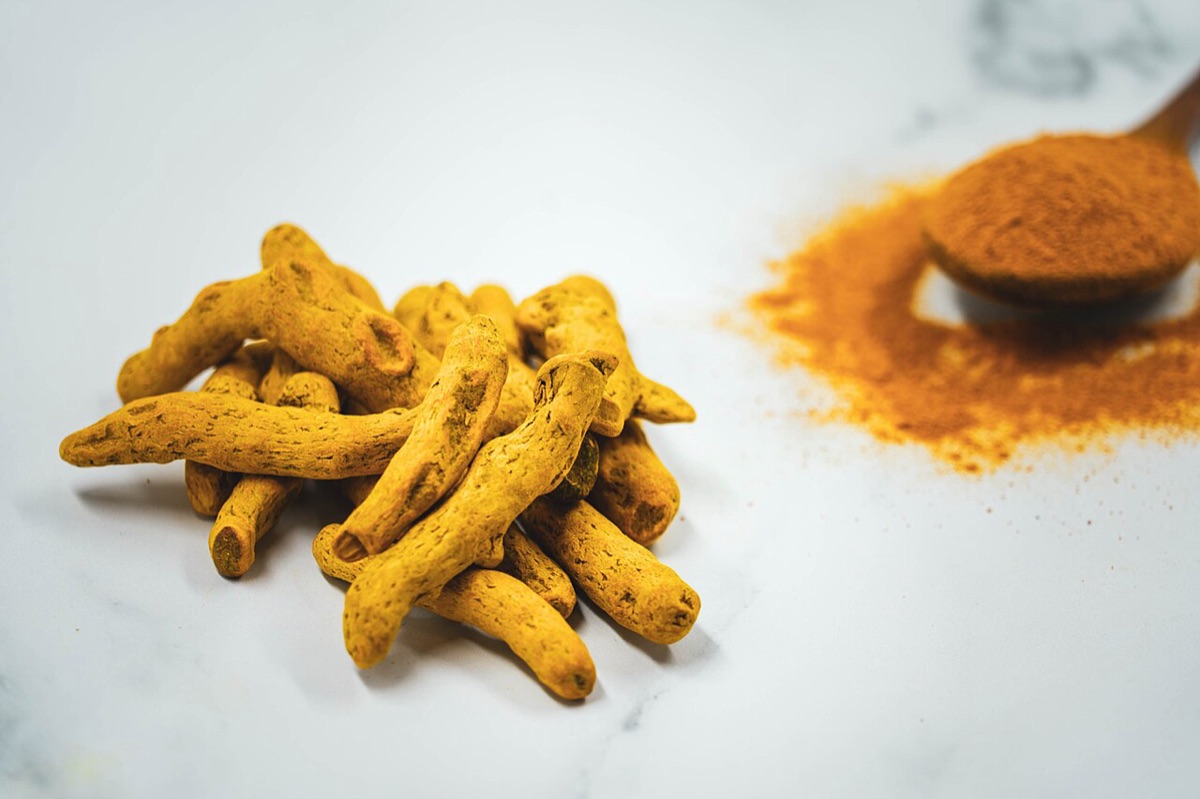
Golden Turmeric & Black Pepper Shot
Fresh turmeric with a generous crack of black pepper and sweet orange juice — a sunny, earthy shot built around how curcumin is absorbed.
Limited evidence
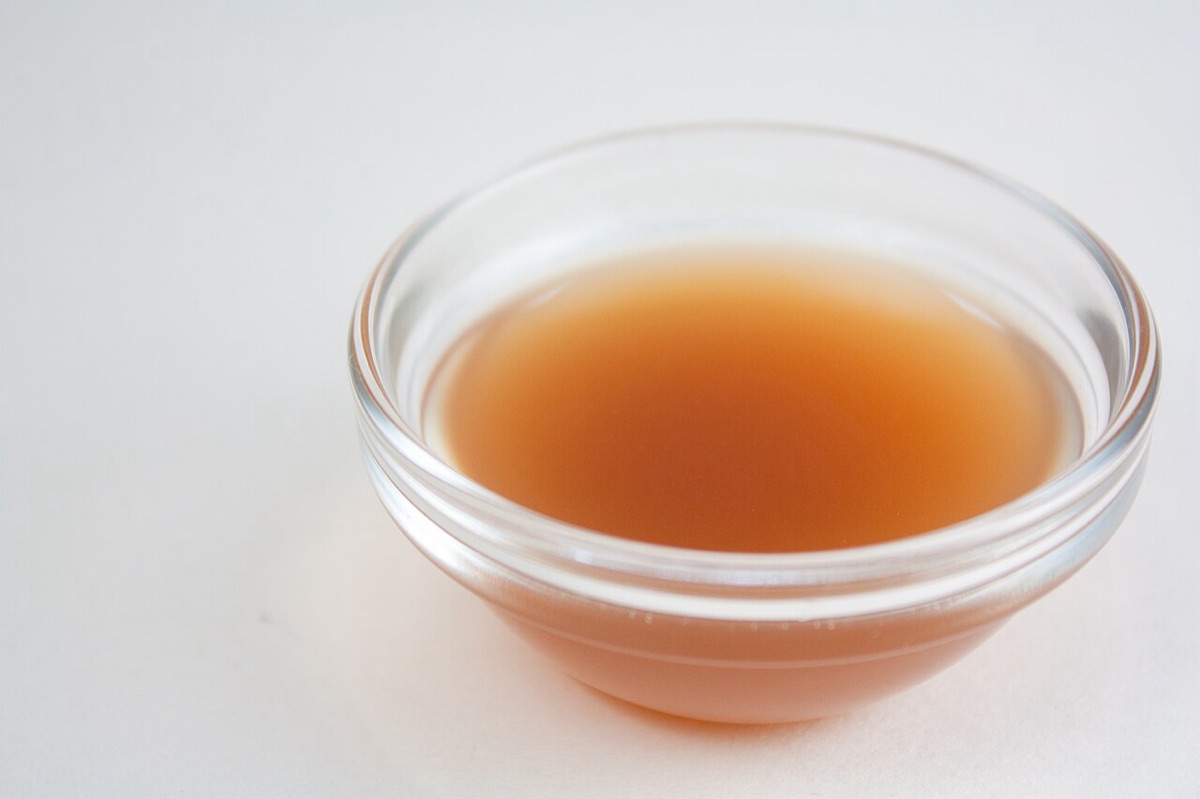
Apple Cider Vinegar, Honey & Cayenne Shot
A tangy, gently spicy shot of diluted apple cider vinegar, honey and a pinch of cayenne — the old-fashioned pre-meal tonic.
Limited evidence
Lemon, Ginger & Cayenne Fire Shot
A hot, sour, sharp shot that wakes you up — plenty of ginger, a good squeeze of lemon and a pinch of cayenne for the burn.
Traditional use
Have a recipe of your own? Share it with us. We read every one before it goes on the site.