Recipes · Health Shot
Sauerkraut Brine & Cucumber Shot
Reader ratingsTangy raw sauerkraut brine softened with fresh cucumber juice, lemon and dill — a salty-sour, cooling sipper that turns the liquid left in the jar into a drink.
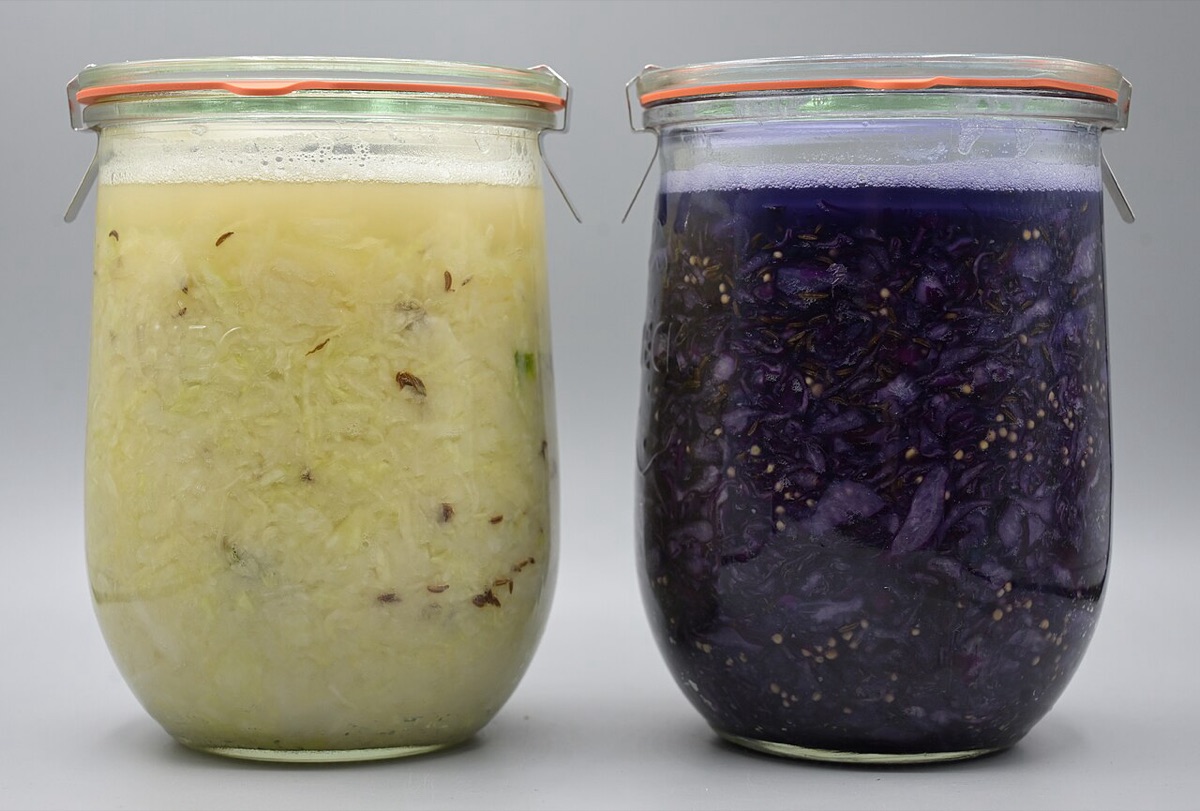
Raw sauerkraut juice (Sauerkrautsaft) is a long-standing German and Eastern European drink, and many kitchens simply keep the brine to sip or to season soups and dressings.
Safety
- The brine is salty: each shot holds roughly 150–300 mg of sodium (about a tenth of a teaspoon of salt), depending on the jar. Count it if you have high blood pressure, heart failure or kidney disease, or are told to limit sodium. Keep it away from babies and toddlers, whose salt limits are very low.
- Fermented foods contain tyramine and histamine. If you take a monoamine oxidase inhibitor (MAOI) antidepressant, high-tyramine foods can cause a dangerous blood-pressure spike, so ask your prescriber; with histamine intolerance, expect headache, flushing or hives and stop if so.
- Unpasteurized ferments carry a small risk of infection in people with weakened immune systems or central venous catheters, so ask your clinician first if that is you or if you are pregnant. Cabbage is rich in vitamin K, so keep your intake steady and tell your prescriber if you take warfarin.
- It can cause gas and bloating at first. A shot is a small extra, not a substitute for a meal.
Why it’s good for you
Raw sauerkraut brine carries the lactic acid, and in unpasteurized jars the live bacteria, of fermented cabbage; cucumber and dill add water and a cooling, herbal flavor with almost no sugar.
Evidence
Traditional use
Long history of use; little or no direct research on this preparation.
No trial has tested sauerkraut brine. In an 87-person crossover trial, 3 1/2 oz (100 g) a day of fresh or pasteurized sauerkraut for four weeks changed a few gut bacterial species and slightly lowered systolic blood pressure but did not change gut-barrier markers, and the authors concluded it produced no appreciable health benefit in healthy people. In a 34-person pilot in people with irritable bowel syndrome, symptom scores fell over six weeks of sauerkraut (pasteurized or not), but everyone ate sauerkraut, so there was no comparison group without it, and the study was underpowered. A 17-week trial found a diet high in fermented foods raised gut-microbe diversity and lowered inflammatory markers in 18 people, but it tested many foods, not kraut alone; a 2 oz shot holds under 1 oz of brine, far less than any of these trials gave.
General information from research and traditional use — not medical advice, and not a treatment for any condition. If you are pregnant, nursing, taking medication or managing a health condition, check with your clinician first, and seek care for symptoms that are severe or do not improve.
Ingredients
Instructions
- Taste a spoonful of the brine first; jars vary a lot in saltiness. Pour 1/2 cup of brine into a measuring cup, leaving the kraut in the jar.
- Chop the cucumber into pieces that fit your juicer or blender, and roughly chop the dill.
- Juicer: run the cucumber and dill through the juicer. No juicer: blend the cucumber, dill and 2 tbsp cold water on high for 45 seconds, then pour through a nut-milk bag or fine sieve and press hard. You should have about 3/4 cup (6 oz) of juice.
- Stir the brine and the lemon juice into the cucumber juice. Do not heat it, since warmth would kill the live bacteria in the brine.
- Taste and adjust: a splash more cucumber juice or cold water if it is too salty, a little more lemon if it is flat.
- Pour into a sealed glass bottle and chill. Shake and pour a 2 oz shot to drink with a meal; begin with half a shot if you are new to fermented foods.
Tips
- Read the jar: the refrigerated kind labeled raw or unpasteurized, with only cabbage and salt (and perhaps caraway) on the label, holds live bacteria. Shelf-stable cans and jars are heat-treated, so the brine will taste the same but has no live cultures.
- Keeps 3 days in a sealed glass bottle in the fridge, because cucumber juice oxidizes quickly. For longer, keep the brine and cucumber juice apart and stir them together a shot at a time.
- Eat the kraut too: the largest sauerkraut trial gave 3 1/2 oz (100 g) of kraut a day, far more than the brine in a shot supplies.
- Want it spicier? Add a thin slice of fresh ginger to the blender, or finish a shot with a few drops of hot sauce.
Reader ratings & reviews
– out of 5
Loading ratings…
Rating breakdown
- 5 stars 0
- 4 stars 0
- 3 stars 0
- 2 stars 0
- 1 star 0
Made this? Please rate it.
Check your email
We sent a sign-in link to . Click it and you’ll come straight back here, signed in. It expires in 15 minutes; check your spam folder if it doesn’t show up. Thank you for helping the community!
Your review
Reviews are personal experiences. Every review is read by our team before it appears.
More health shots
Fresh Ginger Lemon Shot
A bright, warming shot of fresh ginger and lemon softened with a little honey — the classic for an unsettled stomach.
Moderate evidence
Golden Turmeric & Black Pepper Shot
Fresh turmeric with a generous crack of black pepper and sweet orange juice — a sunny, earthy shot built around how curcumin is absorbed.
Limited evidence
Apple Cider Vinegar, Honey & Cayenne Shot
A tangy, gently spicy shot of diluted apple cider vinegar, honey and a pinch of cayenne — the old-fashioned pre-meal tonic.
Limited evidence
Lemon, Ginger & Cayenne Fire Shot
A hot, sour, sharp shot that wakes you up — plenty of ginger, a good squeeze of lemon and a pinch of cayenne for the burn.
Traditional use
Have a recipe of your own? Share it with us. We read every one before it goes on the site.