Recipes · Home Remedy
Homemade Calendula Salve
Reader ratingsDried calendula flowers steeped in warm olive oil, strained, and set with beeswax into a golden balm for dry, chapped or irritated skin and small scrapes. The trials tested standardized calendula products, not homemade salve, so think of this as a good moisturizer with a folk reputation.
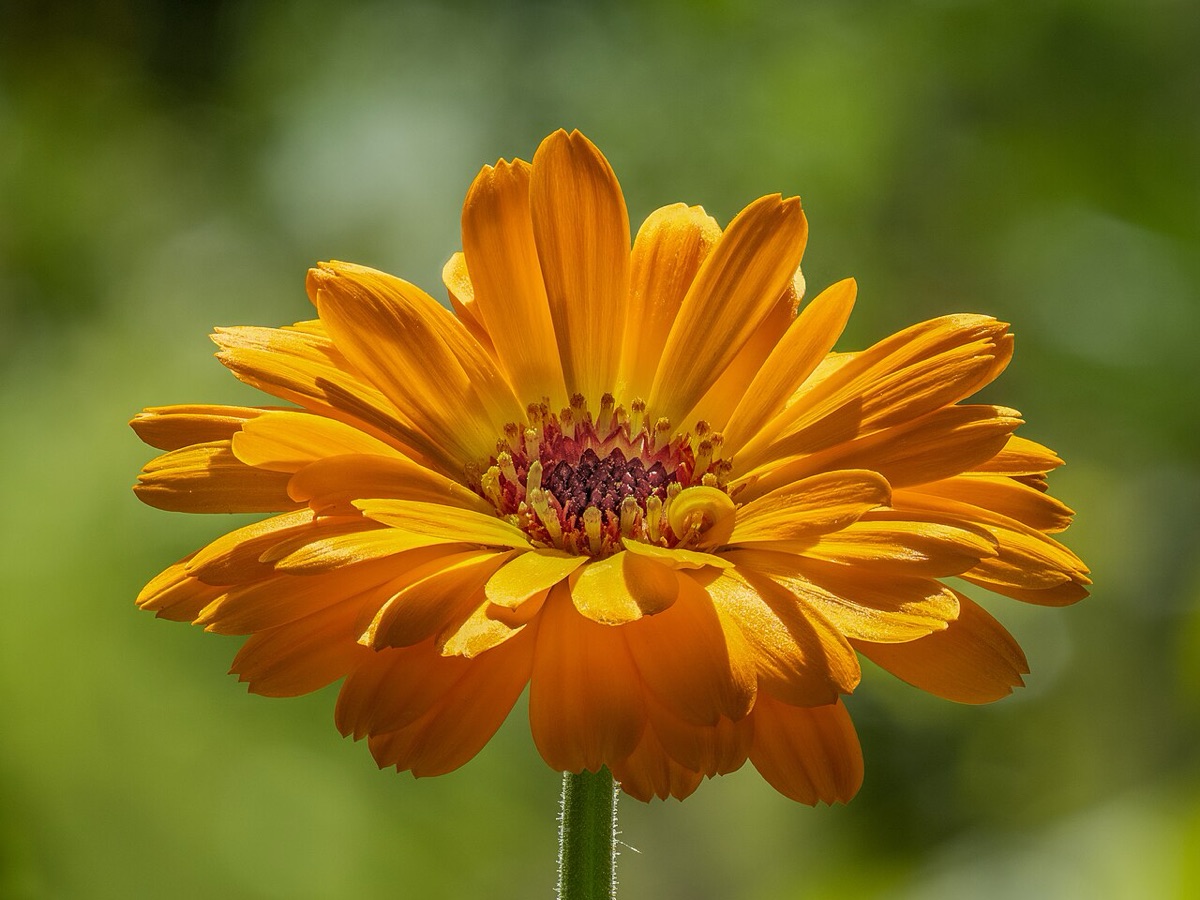
Calendula (pot marigold) petals have long been steeped in oil for skin salves in European folk herbalism.
Safety
- For the skin only. Do not swallow the salve or make tea from this oil, and keep it out of the eyes, mouth and genital area.
- Calendula belongs to the daisy family. Skip it if you react to ragweed, chrysanthemums, daisies, marigolds or chamomile, or to beeswax. Patch-test on your inner forearm for 24 hours first, and stop if the skin reddens, itches or burns.
- Use it on intact skin or on small, shallow, clean scrapes only, and clean any scrape well first, because a greasy salve over dirt can trap it. See a doctor for a wound with spreading redness, swelling, pus or fever, and for any burn beyond a small first-degree burn (cool it under running water for 20 minutes first).
- If you are having radiotherapy, ask your cancer team before putting any cream or salve on skin in the treated area. The trial used a specific commercial ointment under supervision, and a homemade oil may not be allowed.
- Ask a midwife or doctor before using it in pregnancy or while breastfeeding, and never put it on nipples where a baby could swallow it. Ask a pediatrician before using it on babies. A homemade preparation is only as clean as your kitchen, so make small batches and keep the tools dry and clean.
Why it’s good for you
Calendula flowers in olive oil and beeswax make a gentle, fragrance-free moisturizer for dry, chapped or irritated skin, with a long folk record on small scrapes.
Evidence
Limited evidence
Mostly small, early, or laboratory studies.
The trials tested commercial or standardized calendula products, and results are mixed. In 254 patients having breast radiotherapy, a calendula ointment cut the rate of moderate to severe radiation dermatitis (41% versus 63%) compared with trolamine, but a smaller later trial (81 women analysed) found no difference from a standard moisturizer and was underpowered. A 2019 systematic review of 14 studies (7 in animals, 7 in people) found some evidence of benefit for wound healing but mixed human results, and small trials found faster closure of hand wounds with a standardized extract (40 people) and less pain after episiotomy with calendula ointment (100 women). None tested a homemade infused-oil salve, whose strength varies.
General information from research and traditional use — not medical advice, and not a treatment for any condition. If you are pregnant, nursing, taking medication or managing a health condition, check with your clinician first, and seek care for symptoms that are severe or do not improve.
Ingredients
Instructions
- Make sure everything is dry. Wash the tins, jar, strainer and spoons in hot soapy water, rinse them, and let them air-dry completely, because a drop of water can spoil the salve.
- Put the dried calendula flowers in the heatproof jar and pour in the olive oil, so the flowers are covered by at least 1/2 inch (1 cm) of oil. Stir with a dry spoon to release air bubbles.
- Stand the jar in a saucepan holding about 2 inches (5 cm) of water. Warm the oil to 120 to 140°F (50 to 60°C), checking with a thermometer, and keep it there for 3 hours. Stay in the kitchen while the pan is on the stove, top up the water as it evaporates, and if the oil climbs higher, take the pan off the heat for a few minutes. Never let the oil bubble or smoke.
- Lift out the jar and let the oil cool for 15 minutes. Line the strainer with cheesecloth, set it over a clean, dry bowl, and pour the oil through. Fold the cloth and squeeze out the last of the oil, then throw the flowers away.
- Look at the oil: it should be clear and golden. If you see water droplets or a cloudy layer at the bottom, let it settle for 10 minutes and pour off only the clear oil from the top.
- Measure 1/2 cup (120 mL) of the strained oil into the clean jar and add the beeswax pellets. Melt them together in the water bath, stirring, for 5 to 10 minutes, until no wax is visible.
- Test the texture: dip a cold metal spoon in, put it in the freezer for 1 minute, and press the film with a fingertip. It should feel like a soft balm. If it is too hard, stir in a teaspoon of oil; if it is runny, melt in another teaspoon of beeswax.
- Pour the salve into the tins right away and leave them uncovered for about an hour until set. Put on the lids, write the date on each tin, and store them in a cool, dark cupboard.
Tips
- Use dried flowers only. Fresh flowers carry water, and water in oil can grow mold and, in a sealed jar, the bacteria that cause botulism, as happened with garlic stored in oil.
- The salve keeps for about 6 months in a cool, dark place. Throw it out if it smells like old crayons or paint (a sign the oil has gone rancid), looks moldy or beads with water.
- Use any leftover infused oil within about 3 months, as an after-bath body oil or for massage.
- For a firmer balm for hot weather, melt in an extra teaspoon of beeswax. A lighter touch of wax gives a softer salve for winter.
Reader ratings & reviews
– out of 5
Loading ratings…
Rating breakdown
- 5 stars 0
- 4 stars 0
- 3 stars 0
- 2 stars 0
- 1 star 0
Made this? Please rate it.
Check your email
We sent a sign-in link to . Click it and you’ll come straight back here, signed in. It expires in 15 minutes; check your spam folder if it doesn’t show up. Thank you for helping the community!
Your review
Reviews are personal experiences. Every review is read by our team before it appears.
More home remedies
Castor Oil Pack
A flannel soaked in cold-pressed castor oil, laid over the abdomen or a stiff joint and kept warm with a hot-water bottle. A slow, quiet ritual with a long folk following and very little research.
External use Limited evidence
Activated Charcoal Poultice
A black paste of food-grade activated charcoal and ground flaxseed, chilled and pressed onto an itchy insect sting or bite. A folk remedy with no clinical trials behind it, and never a stand-in for emergency care.
External use Traditional use
Cabbage Leaf Compress
Chilled, softened green cabbage leaves wrapped around a sore knee or cupped around swollen, tender breasts. A cheap old European kitchen remedy that has been tested in a few small trials.
External use Limited evidence
Warm Onion Poultice
A whole onion baked until soft, wrapped in cloth and held warm against the chest, neck or the outside of the ear. A folk comfort measure that has never been tested; the warmth is the part you can count on.
External use Traditional use
Have a recipe of your own? Share it with us. We read every one before it goes on the site.